
Every time you browse a website, send an email, join a video call, stream a live event, or play an online game, data is moving between devices across a network. But not every application needs data to be transmitted in the same way. Some applications require every piece of information to arrive correctly and in the proper order. Others prioritize speed and can tolerate a small amount of data loss if it means receiving information faster.
This is where TCP and UDP come into play.
Transmission Control Protocol (TCP) and User Datagram Protocol (UDP) are two fundamental transport-layer protocols used to move data between devices. Although both serve the same broad purpose - transmitting information over a network - they take very different approaches. Understanding the difference between TCP and UDP is essential for developers, network engineers, system administrators, and anyone interested in how internet communication works.
What Is TCP?
TCP stands for Transmission Control Protocol.
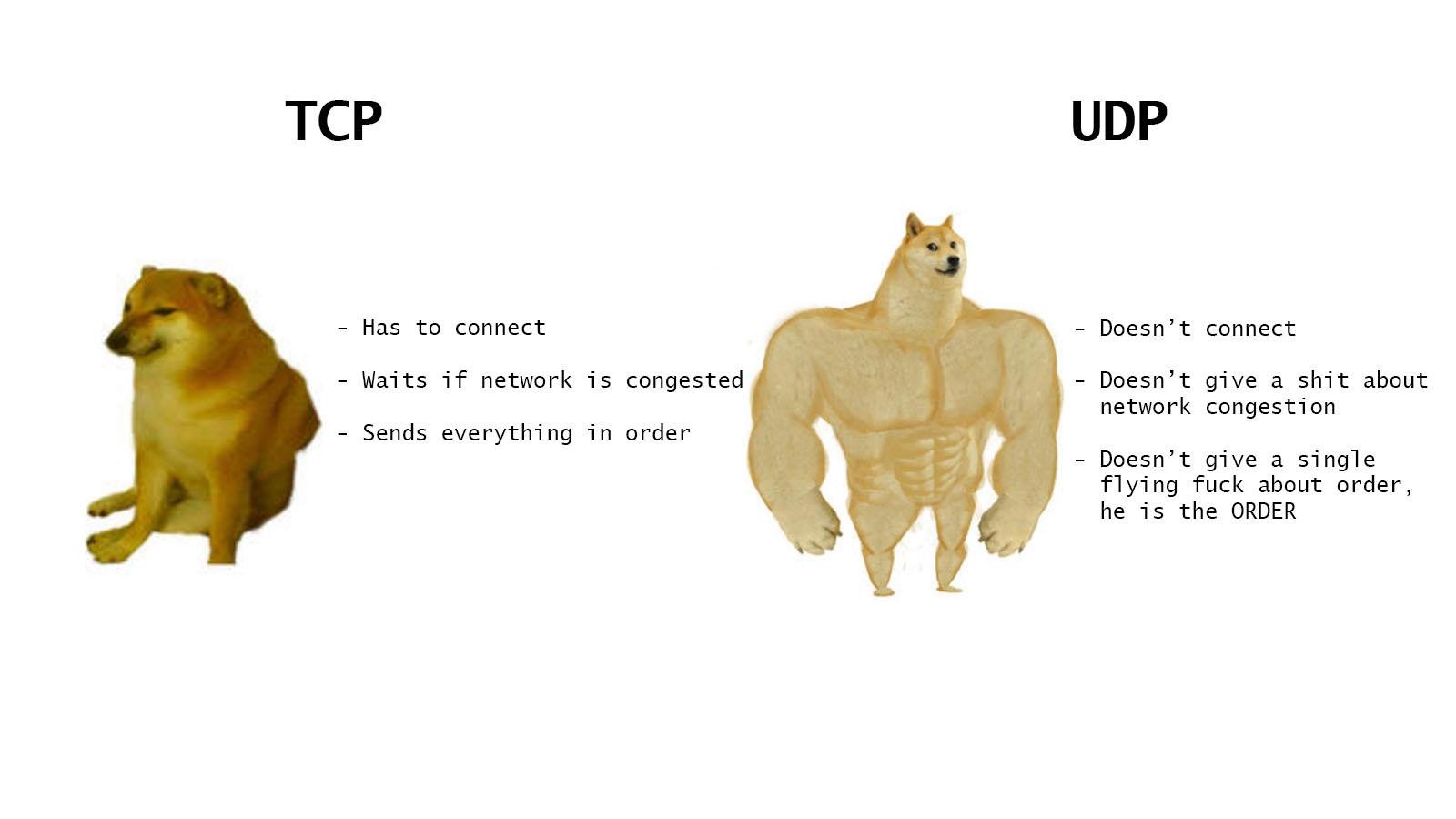
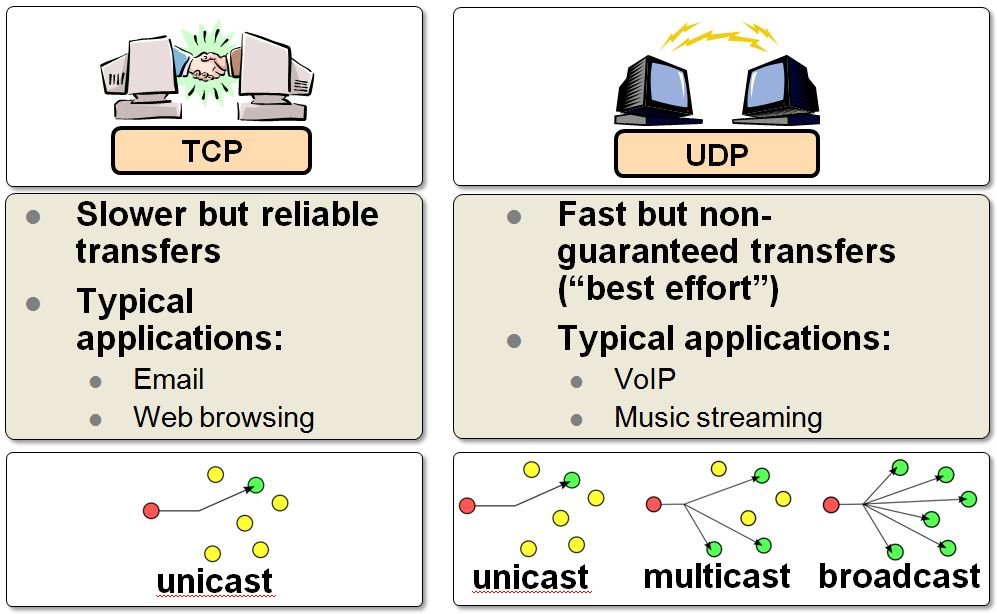
It is a connection-oriented communication protocol, which means a connection is established between the sender and receiver before data transmission begins.
Once the connection is established, TCP ensures that information reaches the destination accurately and in the correct order.
TCP is designed primarily for reliability.
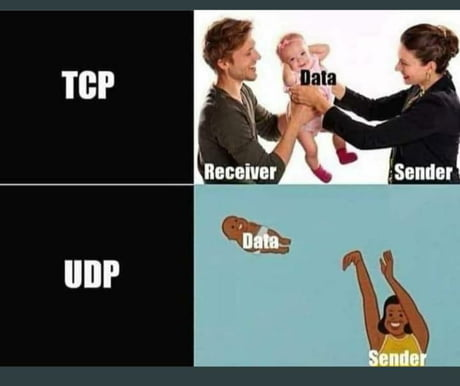
If a data packet is lost during transmission, TCP detects the problem and requests that the missing information be sent again.
This makes TCP suitable for applications where losing even a small amount of data could affect the final result.
Common examples include:
- Web browsing
- File transfers
- Database communication
- Remote login
- Business applications
When downloading an important document, for example, you would not want several pieces of the file to disappear simply because the network became unstable.
TCP helps prevent that from happening.
How Does TCP Work?
Before transmitting application data, TCP establishes a connection between two devices.
This process is commonly known as the TCP three-way handshake.
Once communication begins, TCP monitors the data packets being transmitted.
Each packet is tracked so the receiving system can determine:
- Whether all packets arrived
- Whether packets arrived in the correct sequence
- Whether any information was duplicated
- Whether damaged or missing information must be retransmitted
After communication is complete, the connection is closed.
This additional coordination makes TCP highly reliable, but it also introduces more overhead compared with UDP.
Key Features of TCP
TCP provides several important capabilities.
Connection-Oriented Communication
A communication session is established before data transmission begins.
Reliable Data Delivery
TCP confirms whether data successfully reached the destination.
Ordered Delivery
Data packets are reorganized into the correct sequence before being delivered to the application.
Error Detection
TCP can detect problems during transmission and trigger retransmission when necessary.
Flow Control
TCP manages how quickly data is transmitted to prevent the receiver from being overwhelmed.
Congestion Control
The protocol can reduce transmission rates when the network becomes congested.
These capabilities make TCP an excellent choice when accuracy matters more than minimum latency.
What Is UDP?
UDP stands for User Datagram Protocol.
Unlike TCP, UDP is a connectionless communication protocol.
It sends data without first establishing a dedicated connection with the receiving system.
UDP also does not require the receiver to acknowledge every packet.
This makes the protocol faster and more lightweight.
However, that speed comes with an important trade-off.
UDP does not guarantee that:
- Every packet will arrive
- Packets will arrive in order
- Duplicate packets will not occur
- Lost packets will automatically be retransmitted
For applications where speed matters more than perfect delivery, this behaviour can be desirable.
Common Uses of UDP
UDP is particularly effective for real-time communication.
Examples include:
- Online gaming
- Live video streaming
- Voice over IP
- Video conferencing
- DNS queries
- Real-time broadcasting
Consider a live video call.
If a tiny portion of audio or video data is lost, retransmitting that packet several seconds later would provide little value. It is usually better to continue streaming the latest information.
This is why UDP is commonly used in latency-sensitive applications.
How Does UDP Work?
UDP follows a simpler communication process.
The sender creates a datagram and sends it directly to the destination.
There is no initial handshake.
It also has no built-in mechanism requiring the recipient to confirm successful delivery.
Because it involves fewer steps, UDP adds less overhead and can deliver data quickly.
Applications that require additional reliability can implement their own mechanisms above UDP when necessary.
Key Features of UDP
Connectionless Communication
Data can be transmitted without establishing a dedicated connection.
Low Latency
The lack of handshakes and acknowledgements makes communication faster.
Lower Protocol Overhead
UDP headers and processing requirements are relatively lightweight.
Suitable for Real-Time Applications
It works particularly well where receiving current information is more important than recovering old information.
Supports Broadcast and Multicast
UDP can efficiently send information to multiple recipients in certain network environments.
TCP vs UDP: The Main Difference
The most important difference between TCP and UDP is simple:
TCP prioritizes reliability, while UDP prioritizes speed.